
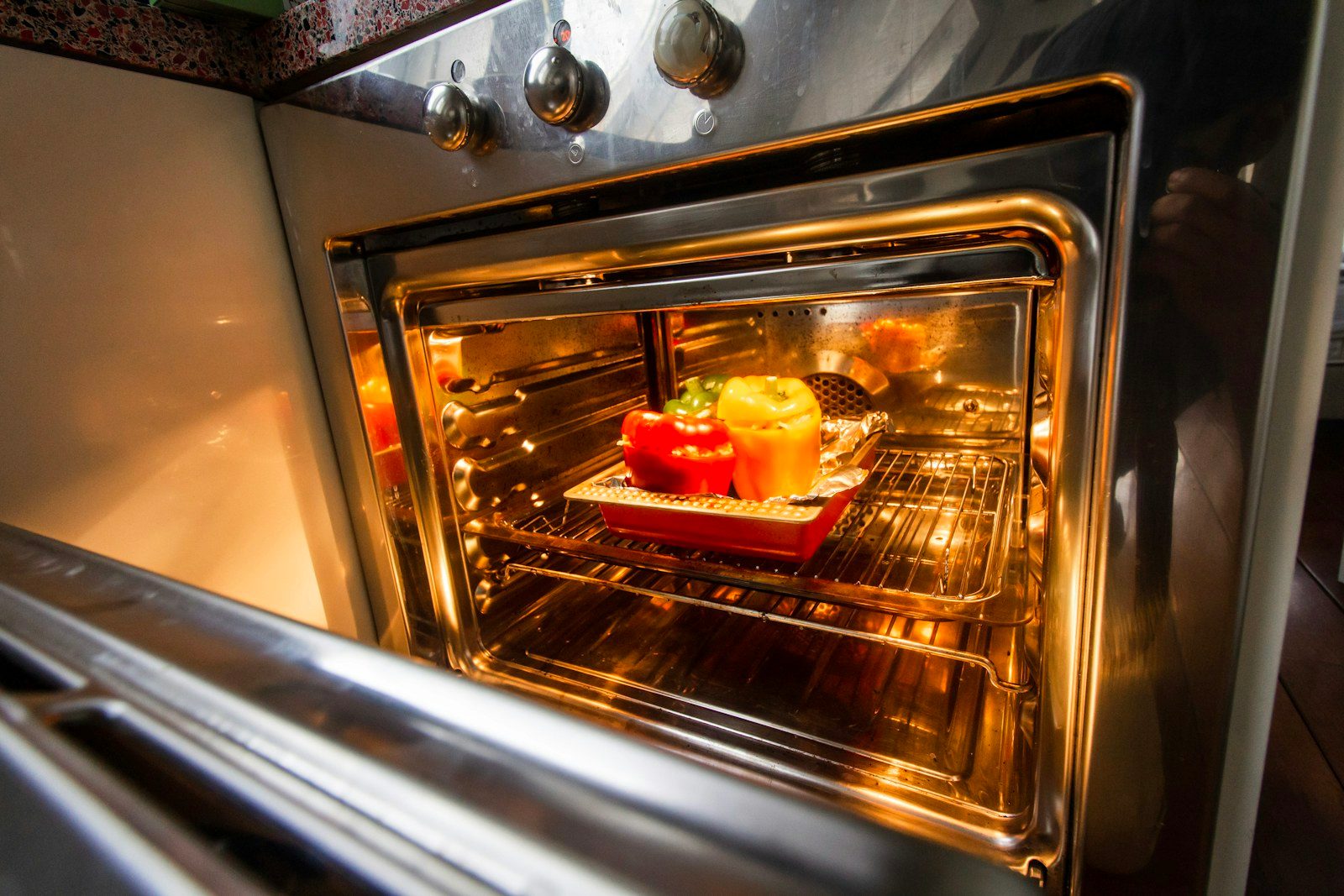
If your oven is not heating up, the cause is usually one of a few things: no power or gas getting to it, a setting such as the clock or timer stopping it from starting, or a failed part like an element, fan motor, thermostat or igniter. A few safe checks will often tell you which, and whether you need a technician.
Safe checks to do before you book a repair
These are things any householder can check without opening the oven up or touching wiring or gas fittings.
- Check the power. Look for an isolation switch (a wall switch, often labelled “oven” or “cooker”) near the oven or in a nearby cupboard and make sure it is on. If the oven’s circuit breaker or safety switch in your switchboard has tripped, you can switch it back on once. If it trips again, leave it off and book a repair, because that points to an electrical fault.
- Check the clock and timer. Many ovens with a digital clock will not heat until the time has been set, for example after a blackout, or if they have been left in an automatic or delayed-start mode. Check your appliance manual for how to reset it to manual cooking.
- Check the function and temperature. Make sure a cooking function is selected, not just the oven light or a defrost setting, and that the temperature dial is turned up.
- Check the door and seal. Make sure the door shuts fully and look at the rubber seal around the opening. A seal that is torn, flattened or coming away lets heat escape, so the oven struggles to reach temperature.
- For a gas oven, check the cooktop. If your cooktop runs on the same gas supply and its burners light normally, gas is reaching the house. If nothing lights, the problem may be the supply rather than the oven.
Common reasons an electric oven won’t heat
If power is reaching the oven (the light and display come on) but it stays cold or barely warms, one of the heating parts has usually failed.
- A failed element. Elements are the metal coils that produce the heat. Most ovens have a bake element, a grill element at the top and, in a fan-forced oven, a round element around the fan at the back. If the grill works but baking doesn’t, or the reverse, the element for that function is a likely suspect. Our guide to fan-forced elements explains how that part works.
- A fan motor that has stopped. In a fan-forced oven the fan moves the hot air around. If it stops, the oven may heat slowly, unevenly or not at all on fan settings. A fan that has become noisy is often a sign it is on the way out.
- A faulty thermostat. The thermostat senses the temperature inside the oven and switches the elements on and off to hold it. When it fails, the oven may never reach the set temperature, or may run too hot.
- A selector switch or connection fault. The function knob, the electronic controls or a loose connection can stop power reaching an element even when the element itself is fine. These need to be tested with the right equipment.
Why a gas oven might not heat
With a gas oven, the usual culprits are the parts that light the gas and keep it burning safely:
- Ignition. If you can’t hear clicking or see a spark when you try to light the oven, the igniter or its switch may have failed.
- The flame failure device. This is a safety device that shuts off the gas if it can’t sense a flame. If the oven lights but goes out as soon as you let go of the knob, this part is a common cause.
- Supply or regulator problems. A weak, yellow or lifting flame can mean the oven is not getting the right gas pressure.
Don’t try to adjust or take apart anything on the gas side. The NSW Government’s gas safety guidance says to always have a licensed gasfitter install, repair and service gas appliances.
When the oven heats, but not enough
Sometimes the oven does warm up but food takes far longer than the recipe says, or bakes unevenly. To check, put an oven thermometer on the middle shelf, set the oven to 180°C and leave it for about 20 minutes. If the reading is well below what you set, the thermostat, an element or the fan is not doing its job. If one side of the food always cooks faster, a failing element or fan is more likely than a thermostat fault. A worn door seal can also make a small but noticeable difference.
Stop using the oven if you notice any of these
- A smell of gas
- A burning electrical or plastic smell, smoke from the controls, or sparking
- A circuit breaker or safety switch that keeps tripping
- Cracked door glass
If you smell gas, stop using the appliance straight away. Don’t use lighters or matches, put out any flames and don’t turn electrical switches on. If it is safe to do so, open doors and windows, then leave the building and call 000, followed by your gas supplier (their number is on your gas bill). The NSW Government gas safety page sets out these steps in full.
Repair or replace?
Elements, fan motors, thermostats and igniters are all replaceable parts, so an oven that won’t heat can often be repaired rather than replaced. Part prices start from the figures on our price list, and the technician quotes the part before fitting it, so you can decide before any work goes ahead. If the oven is old, has several faults or the parts are no longer available, replacing it may make more sense. Our installation service covers a like-for-like swap in the same place on the existing connection. Moving the oven, adding a new gas or power point, or changing the cut-out is quoted first.
Rental properties
If you manage a rental, there is a separate booking path for real estate agencies booking for a tenanted property. On the day, the technician calls whoever is at the property.
Oven Not Heating FAQs
Why does my oven light come on but the oven won’t heat?
The light shows the oven has power, so the fault is further along: a failed element, a thermostat, the function selector or the controls. Check first that the clock is set and the oven isn’t in a timer or delayed-start mode.
Can I replace an oven element myself?
It isn’t a safe DIY job. Changing an element means removing panels and working on electrical connections, so leave it to a qualified technician.
How long should an oven take to preheat?
It varies by oven and temperature, so check your appliance manual. If yours now takes much longer than it used to, or never gets there, that is worth having looked at.
How much is the call-out?
The call-out fee is capped at $140 + GST. Any parts are quoted before fitting. See our oven and stove repairs page for what’s covered.
We come to you across Greater Sydney and the Blue Mountains (see the areas we service). If your oven still won’t heat, book a repair online or call (02) 9067 3131.