
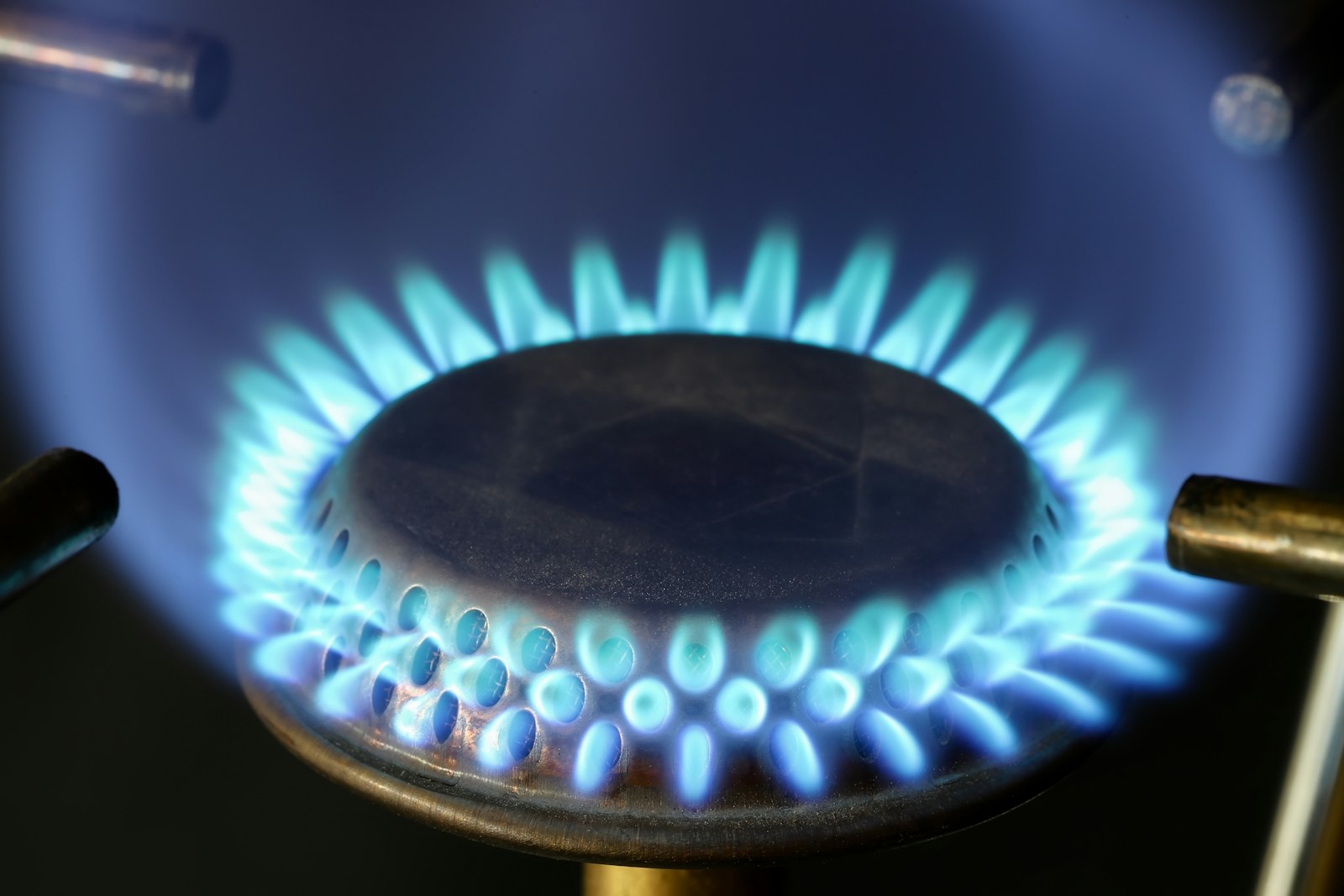
A gas stove with a yellow flame is usually telling you the gas isn’t burning cleanly. Most often the cause is simple: a burner cap that isn’t sitting flat, burner ports clogged with food or cleaning residue, or a burner that is still damp after washing. If the flames stay yellow or lazy after a careful clean, or you see soot on your pots, stop using that burner and have it checked. A properly working burner should burn with a crisp blue flame.
What a healthy gas flame looks like
On a gas cooktop, gas mixes with air inside the burner before it comes out of the burner ports, the small holes or slots around the burner head. When the mix is right, you get a steady blue flame with a slightly darker blue inner cone at each port. The flames sit evenly around the burner, stay the same height, and make a soft, even sound.
A yellow or orange flame means the gas isn’t getting enough air to burn completely. This is called incomplete combustion. A yellow flame is also cooler, so it heats pans more slowly and leaves black soot on the base of your cookware.
When a little orange is normal
Not every flicker of colour is a fault. Brief orange or yellow streaks can appear when:
- dust or food particles in the air burn off as they pass through the flame
- something boils over or salty water splashes onto the burner
- you use cooking spray, a humidifier or aerosol cleaner near the cooktop
- you first light a burner that hasn’t been used for a while.
These streaks come and go within seconds. The warning sign is a flame that is mostly yellow or orange, floppy or lifting off the burner, uneven around the ring, or leaving soot. That is worth acting on.
Why a yellow flame is a safety concern
Gas that doesn’t burn completely can produce carbon monoxide, a gas you can’t see or smell. The NSW Government lists carbon monoxide poisoning as a result of incomplete combustion, and the ACT Emergency Services Agency names yellow or orange flames where there should be blue ones as a danger sign that carbon monoxide may be leaking.
So while a yellow flame is often caused by something as small as a dirty burner, it isn’t something to cook through for weeks. Use your rangehood and keep the kitchen ventilated while you sort it out.
Safe checks you can do yourself
These checks don’t involve taking the cooktop apart or touching any gas fittings or wiring. Turn all the burners off and let everything cool before you start.
- Check which burners are affected. If only one burner is yellow, the problem is almost certainly with that burner’s parts. If every burner is yellow, note that down for the technician.
- Lift off the trivet, burner cap and burner head. These loose parts lift straight off on most cooktops. Check your appliance manual if you’re unsure.
- Clean the burner ports. Wash the cap and head in warm soapy water. Use a soft brush or a straightened paper clip to clear any blocked holes. Don’t use a toothpick, which can snap off inside a port.
- Dry everything completely. Water left in the ports is a common cause of uneven, spluttering or yellow flames. Leave the parts to air-dry fully before refitting them.
- Refit the parts so they sit flat. A burner cap that is crooked or on the wrong burner can disturb the flame. Most caps should sit level and not rock.
- Light the burner and watch the flame. Give it a minute to settle. If the flame is now even and blue, you’re done.
For a burner that won’t light at all, or keeps clicking, see our guide to why a gas burner won’t light.
Causes that need a technician
If the flame is still yellow after a thorough clean and dry, the cause is usually something inside the cooktop that isn’t a DIY job. Common ones include:
- A damaged or warped burner head or cap. Cracks, corrosion or warping change how gas and air mix. Replacing the burner parts is often all it takes.
- A blocked or wrong injector. The injector is a small jet that meters the gas into each burner. If it is partly blocked, or it is the wrong size for your gas type, the flame burns poorly.
- The wrong gas setup. Cooktops are set up for either natural gas or LPG (bottled gas). A cooktop that was moved between the two without being converted properly can burn yellow on every burner.
- A gas pressure problem. If the supply pressure is wrong, the flames can be too large, too small or the wrong colour.
Please don’t try to adjust injectors, air settings or gas connections yourself. That is regulated gas work, not a DIY job. The NSW Government’s gas safety requirements explain who can install, repair and service gas appliances.
If you smell gas
A yellow flame on its own isn’t a gas leak, but if you ever smell gas, stop cooking and turn the burners off. Don’t use light switches, phones or anything that could spark, and don’t light a flame. Leave the building and open doors and windows on the way out if it’s safe to do so. Once you’re outside, in NSW call 000 and ask for the fire service, or call Jemena’s gas emergency line on 131 909.
What happens when you book a repair
We come to you. You book online by postcode, and you’ll get a confirmation email with a link to move or cancel the booking up to four hours beforehand, plus a reminder the day before. The technician calls whoever is at the property, inspects the cooktop and quotes any parts before fitting them. Part prices start from the figures on our price list.
If you manage a rental, our real estate and strata page explains how agencies can book a repair for a tenanted property.
Gas Stove Yellow Flame FAQs
Is it safe to use a gas stove with a yellow flame?
A brief flicker of orange is normal. A flame that stays mostly yellow, or leaves soot on your pans, is a sign of incomplete combustion. Stop using that burner, keep the kitchen ventilated and have it checked.
Why is only one burner burning yellow?
When just one burner is affected, it’s usually that burner’s cap or head. It may be dirty, damp, crooked or damaged. Clean, dry and reseat it first. If that doesn’t fix it, the burner parts or its injector may need replacing.
Can cleaning the burner fix a yellow flame?
Often, yes. Blocked ports and leftover moisture are among the most common causes. Make sure the parts are completely dry before you refit them, and check the cap sits flat.
How much does it cost to fix a yellow gas flame?
The call-out fee is capped at $140 + GST. Any parts are quoted before fitting. See our oven and stove repairs page for what’s covered.
We come to you across Greater Sydney and the Blue Mountains (see the areas we service). If your gas stove still has a yellow flame, book a repair online or call (02) 9067 3131.