
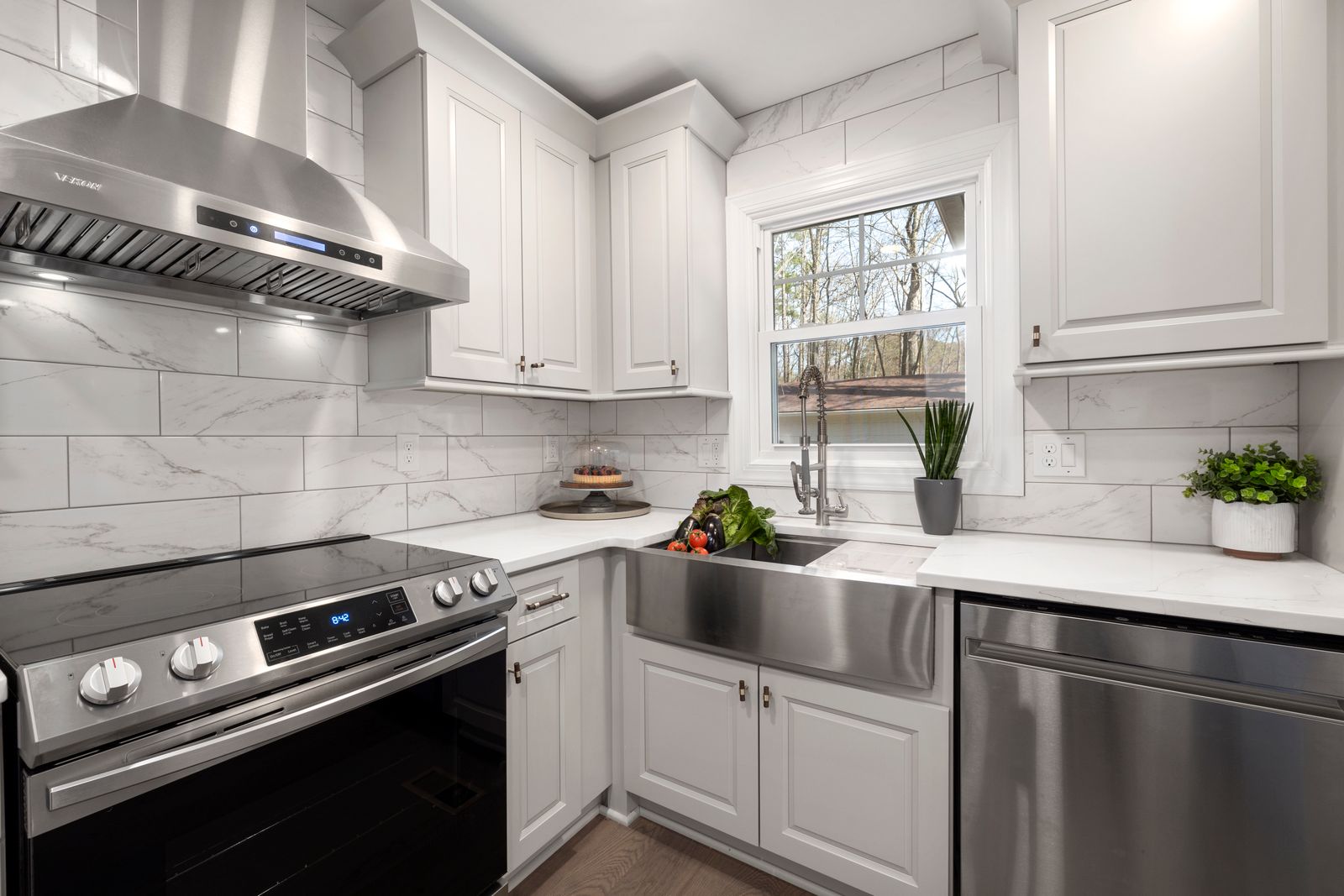
A rangehood that isn’t sucking up steam and smoke is usually being held back by something simple: grease filters clogged with fat, a carbon filter that’s overdue for replacement, or a fan running on too low a speed. If cleaning or replacing them doesn’t bring the suction back, or the fan sounds wrong, the cause is more likely in the motor, the controls or the ducting, and that’s a job for a technician.
Ducted or recirculating: know which rangehood you have
Rangehoods work in one of two ways. A ducted rangehood pulls air through its filters and pushes it out of the house through a duct, a pipe that runs through the ceiling or wall to a vent outside. A recirculating rangehood (also called ductless) pulls air through a grease filter and then a carbon filter, which absorbs cooking smells, and blows the cleaned air back into the kitchen.
This matters because the likely causes differ. A recirculating rangehood will never clear steam from the room the way a ducted one does; it is designed to trap grease and smells, not to remove moisture. If you aren’t sure which you have, check your appliance manual or look for a duct leaving the top of the hood.
Common reasons a rangehood stops sucking
- Clogged grease filters. The metal mesh or baffle filters under the hood catch fat from cooking. Once they are coated, air struggles to get through and suction drops sharply. This is the most common cause by far.
- A saturated carbon filter. On recirculating models, the carbon filter fills up over time, restricting airflow and letting smells through. Carbon filters can’t be cleaned; they are replaced.
- The wrong speed, or switched on too late. Low speed suits a simmering pot, not searing or frying. Turning the hood on a few minutes before you start cooking and leaving it running for a while afterwards makes a noticeable difference.
- A blocked or damaged duct. Grease build-up inside the duct, a crushed or kinked flexible duct in the ceiling, or an outside vent flap that is stuck shut can all choke a ducted rangehood.
- Ducting that was never right. Long duct runs with lots of bends, or a duct narrower than the rangehood’s outlet, reduce suction from day one. If the hood has never worked well, suspect this.
- A failing fan motor. A motor that is wearing out may run slowly, hum, rattle, run hot or struggle to start. Grease that gets past dirty filters makes this worse.
- Control or switch faults. If some speeds work and others don’t, or the buttons don’t respond, the fault is likely in the controls.
What you can safely check yourself
None of these checks involve opening panels or touching wiring. Turn the rangehood off at its controls before you start, and let it cool down if you’ve just been cooking.
- Check it has power. If nothing happens at all, including the light, check the switch at the wall or the isolation switch (a separate on/off switch, often in a nearby cupboard or above the bench). Then check whether the safety switch or a circuit breaker in your switchboard has tripped. If it trips again when you reset it, leave it off and call for help.
- Take out and clean the grease filters. Most filters unclip from underneath. Soak them in hot water with dishwashing liquid, scrub gently with a soft brush, rinse, and let them dry completely before you clip them back in. Your appliance manual says how often to clean them for your model; if you fry often, do it more often.
- Replace the carbon filter on a recirculating hood. Your manual lists the right filter and the replacement interval. If it’s well past its last change, that alone can explain weak suction and lingering smells.
- Test it at each speed. With the filters back in, hold a sheet of paper towel just under the hood. On high, a working hood should pull it up firmly. Listen for rattles, grinding, or a hum with no fan movement.
- Look at the outside vent if you can see it safely. On a ducted hood, check from the ground whether the vent on the outside wall or eave is blocked by leaves, a nest or a stuck flap. Don’t climb onto the roof or up a ladder to check.
- Give it some air. Opening a window slightly while the hood runs gives the air somewhere to come from. A closed-up kitchen can noticeably weaken a powerful hood.
Why grease build-up matters
Weak suction isn’t only an annoyance. Fire and Rescue NSW advises keeping your oven, rangehood and grill clean and in good working order, because built-up grease and fat can catch fire. Its cooking fire safety tips are worth a read.
When to call a technician
Book a repair if:
- suction is still weak after cleaning or replacing the filters
- the fan hums, grinds, rattles or smells hot
- the hood won’t turn on even though the power and switchboard are fine
- the light works but the fan doesn’t, or only some speeds work
- the hood trips the safety switch
- you suspect the duct is crushed, disconnected or blocked inside the ceiling
These faults involve the motor, wiring, controls or ducting. Leave the covers on and let a technician open the hood up. They’ll find the fault and quote any parts before fitting. A rangehood that has stopped extracting is one of the faults covered on our oven and stove repairs page.
Repair or replace?
A rangehood with a worn motor or a failed switch is often worth repairing, especially a built-in or canopy hood that suits your kitchen. Replacement starts to make sense when the hood is old and parts are hard to get, or when it has never coped with the way you cook.
If you do replace it, a like-for-like swap in the same place on the existing connection keeps the job simple. Moving the hood, new ducting or a change to the cabinetry cut-out is quoted first. See oven, cooktop and rangehood installation for what’s involved. Part prices start from the figures on our price list, and the technician will confirm what’s needed on the day.
For landlords and property managers
If a rangehood came with a rental property and a tenant reports it isn’t extracting, ask whether the filters have been cleaned. If they have and it’s still weak, it needs a proper look. Agencies can book a repair for a tenanted property through our real estate and strata page, and the technician calls whoever is at the property.
Rangehood not sucking FAQs
How often should I clean rangehood filters?
Check your appliance manual for the recommended interval for your model. If you fry or cook with a lot of oil, clean them more often than that.
Why does my rangehood make noise but not suck?
Usually it’s clogged filters, a blocked duct, or a fan or motor that is failing. Clean the filters first. If the noise is a grind, rattle or hum, stop using the hood and have it checked.
Can a recirculating rangehood remove steam?
Not well. A recirculating hood traps grease and absorbs smells through its carbon filter, but it returns the air, moisture included, to the kitchen. Opening a window while you cook helps.
What does a rangehood repair cost?
The call-out fee is capped at $90 + GST. Any parts are quoted before fitting, and part prices start from the figures on our price list.
We come to you across Greater Sydney and the Blue Mountains (see the areas we service). If your rangehood still isn’t sucking, book a repair online or call (02) 9067 3131.