
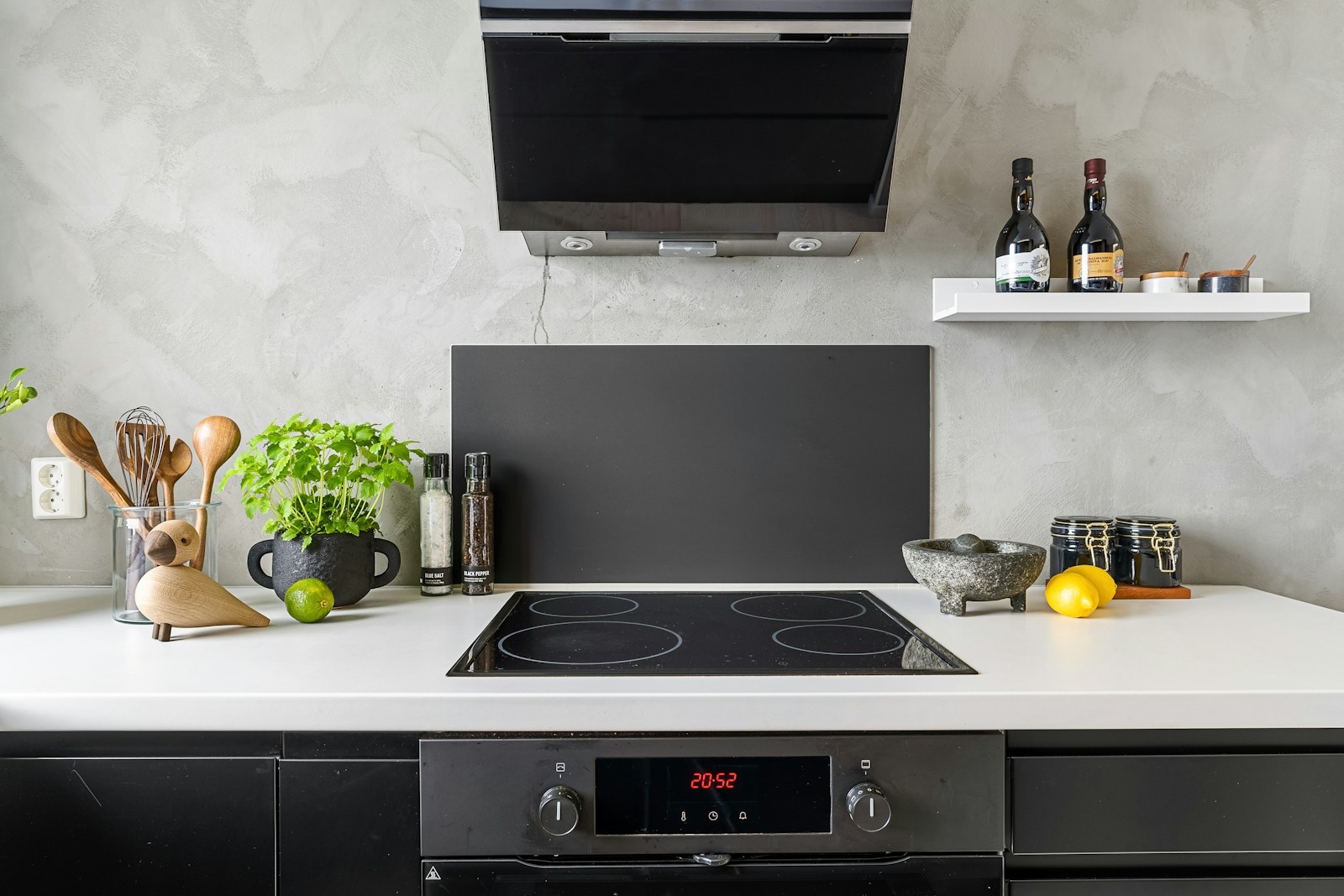
If the glass on your electric cooktop has cracked, or a hotplate has stopped working, the real question is whether to repair it or replace it. A crack across the glass usually means replacing the glass top or the whole cooktop, and you should stop using it until it has been checked. A dead element or switch on an otherwise sound cooktop is often worth repairing. Here’s how to tell the difference, what’s safe to check yourself, and what a like-for-like replacement involves.
Ceramic, solid plate or induction: which do you have?
“Electric cooktop” covers three main types. A ceramic cooktop has radiant elements (heating coils) under a smooth glass-ceramic top, and the zones glow red when they’re on. A solid plate or coil cooktop has raised metal hotplates. An induction cooktop also has a glass top, but it heats the pan directly with a magnetic field and only works with magnetic cookware.
Knowing which one you have matters, because the parts and the repair-or-replace decision are different for each. If you’re not sure, the model number on the rating plate (usually underneath the cooktop) or your manual will tell you. If you’re thinking about switching to induction, our induction cooktop installation guide covers the extra checks involved.
Cracked cooktop glass: stop using it first
A small chip on the edge of the glass is different from a crack across a cooking zone. A crack can let spills and cleaning liquid reach the elements and wiring underneath, and the glass can break further as it heats and cools. If the glass is cracked:
- Turn the cooktop off at the controls and let it cool.
- Switch it off at the cooktop isolation switch or the circuit breaker, if you can reach it safely. Most electric cooktops are wired in rather than plugged into a power point.
- Don’t wipe liquid into the crack, and don’t tape over it and keep cooking.
- Write down the brand and model number, and take a photo of the crack.
- Have it checked before you use it again.
NSW Fair Trading’s advice on avoiding electrical accidents says that if liquid spills onto an appliance, you should disconnect it and have it checked before using it again. It also says to treat a “tingle” or slight shock as a warning, and not to touch the appliance again until it has been repaired.
Can cracked glass be replaced on its own?
Sometimes. On some models the glass top is available as a separate spare part, with or without the elements fitted. On others it’s no longer made, or it costs close to a new cooktop once fitted. It depends on the brand, model and age of the cooktop, so the model number is the first thing to find.
If a replacement top is available, the part is quoted before anything is fitted, so you can weigh it up against a new cooktop before you decide.
Faults that are usually worth repairing
If the glass is intact, many electric cooktop faults come down to a single part:
- One zone or hotplate won’t heat – usually the element itself, or the control switch that feeds it. On a ceramic cooktop the element sits under the glass and is a different part from a solid plate element.
- A zone stays on high or won’t adjust – often the control switch, sometimes called an energy regulator.
- The whole cooktop is dead – check the power first (see below). If the power is fine, it may be a control or wiring fault.
- Error codes or a flashing display on a touch-control cooktop – check your appliance manual for what the code means before calling.
These repairs keep your existing benchtop cut-out and connection, so a sound cooktop with one failed part is often worth fixing. Our repairs page covers the cooktop faults we see most often.
Safe checks before you call
These checks don’t involve opening anything up:
- Check the circuit breaker and safety switch at your switchboard. If one has tripped, reset it once. If it trips again, leave it off and arrange a repair.
- Make sure the cooktop isolation switch is on. It’s often in a nearby cupboard or on the kitchen wall.
- On a touch-control cooktop, check the child lock isn’t on. Your manual shows how to turn it off.
- Wipe the touch controls dry. Water or spills on the control area can stop them responding.
- If one zone won’t heat, try the same pan on a different zone to confirm which one is faulty.
Don’t lift the cooktop out of the benchtop or open it up. NSW Fair Trading notes that parts of an appliance can be live even when its switch is off, and by law any electrical installation work in NSW must be done by a licensed electrician.
Repair or replace? How to decide
There’s no single rule, but these questions usually settle it:
- Is the glass cracked? If it is, and a replacement top isn’t available or costs close to a new cooktop, replacing the cooktop usually makes more sense.
- Is it one part or several? One failed element or switch is usually worth repairing. Several faults at once on an older cooktop tip the balance towards replacing it.
- Can you still get parts? Older and less common models can be hard to find parts for.
- Will a new cooktop fit the existing cut-out? A same-size replacement keeps the job simple.
Any parts are quoted before they’re fitted, so you can decide with the options in front of you. The technician will confirm what’s possible for your cooktop on the day.
What a like-for-like electric cooktop replacement involves
The simplest replacement is a like-for-like swap: a new cooktop of the same type, in the same place, on the existing connection, that fits the existing benchtop cut-out. Before you buy one:
- Measure the cut-out (the hole in the benchtop), not just the old cooktop’s glass. The new cooktop’s installation instructions list the cut-out size it needs.
- Compare the power rating on the new cooktop with the old one. One that draws more power may need the circuit checked.
- Check the space underneath, especially if there’s a drawer or a built-in oven below.
Moving the cooktop, adding a new power point or circuit, or changing the cut-out size is quoted first. Installations are booked by phone, and our installation page explains what’s covered.
Renting? Report it to your landlord or agent
If you rent, report a cracked cooktop or electrical fault to your landlord or managing agent straight away rather than arranging the repair yourself. NSW Fair Trading says electrical problems in a rental should be reported immediately and repaired as a priority. Property managers can see how we work with agencies on our real estate and strata page.
Electric cooktop replacement FAQs
Is it safe to use a cooktop with cracked glass?
It’s best not to. Spills can reach the parts underneath, and the crack can spread as the glass heats and cools. Switch the cooktop off at the isolation switch or circuit breaker and have it checked first.
Can I replace an electric cooktop myself?
No. Most electric cooktops are wired in, and connecting one is electrical work. In NSW, electrical installation work must be done by a licensed electrician.
Will a new cooktop fit my old cut-out?
Often, but not always. Sizes vary between brands and models, so compare the cut-out size in the new cooktop’s installation instructions with your benchtop before you buy. If it’s a different size, the benchtop work is quoted first.
Why has only one hotplate stopped working?
Usually the element for that zone, or the switch that controls it, has failed. As long as the glass is intact, that’s normally a single-part repair.
If your electric cooktop has cracked or stopped heating, call us on (02) 9067 3131 or send a repair enquiry and we’ll call you back to arrange a time. We come to you across the areas we service.