
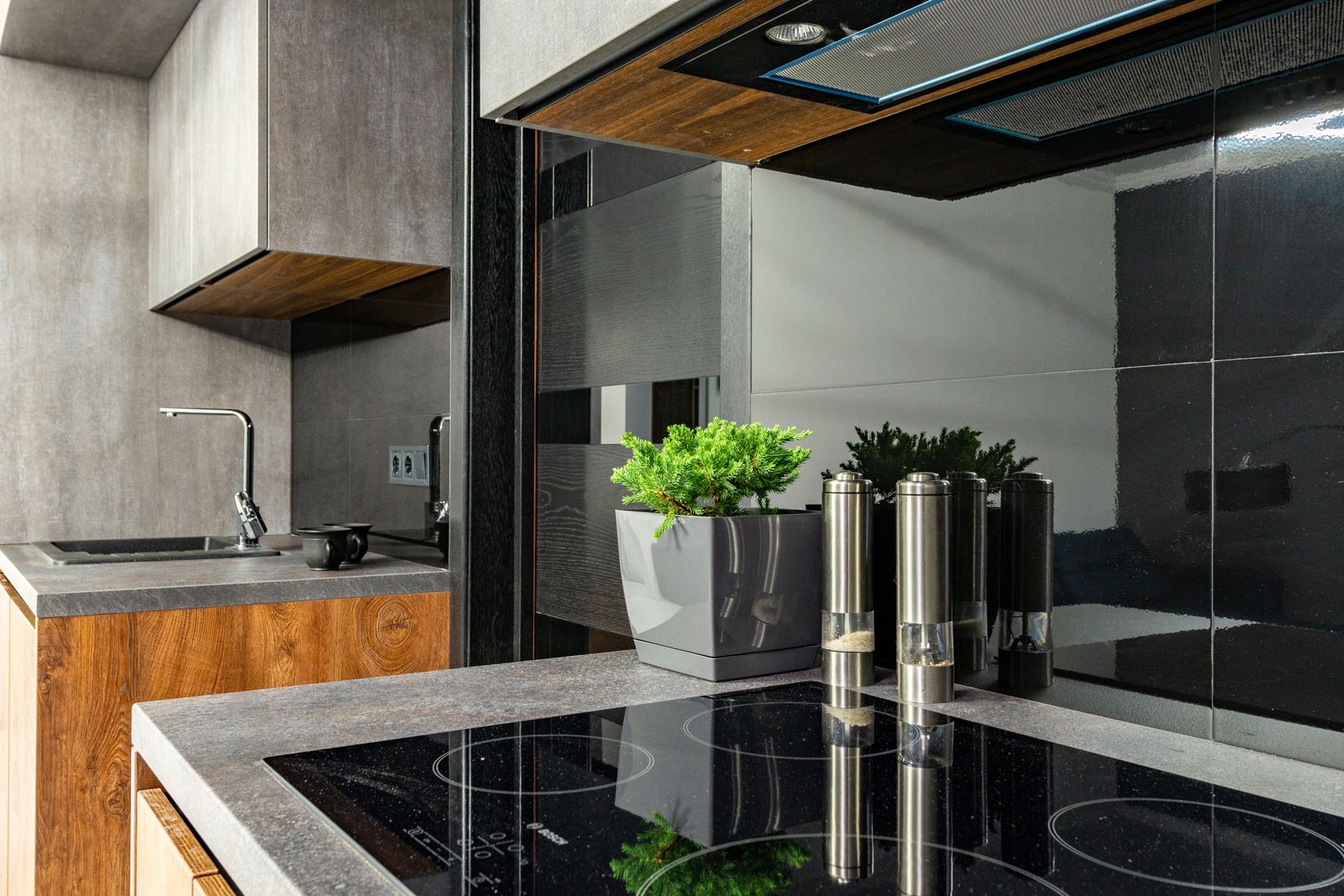
Putting in an induction cooktop is usually a simple job when it replaces an existing electric cooktop in the same spot. Switching from gas is a bigger job: the gas has to be capped off, the cooktop needs a power supply big enough to run it, and the new cooktop has to fit the hole in your benchtop. Check those three things before you buy, and installation day is usually a straight fit rather than a wait while extra work is arranged.
How induction differs from gas and ceramic
An induction cooktop heats the pan directly, using a magnetic field from copper coils under the glass. A ceramic cooktop looks much the same, but it heats an element under the glass, which then heats the pan. Both run on electricity, but induction cooktops generally need a larger supply, and they only work with pans a magnet sticks to. If you’re still deciding whether induction suits your cooking, our article on the pros and cons of induction cooking covers that side.
Check your power supply first
The power supply is the thing most likely to turn a simple swap into a bigger job. The Victorian Government’s induction cooktop buyer’s guide notes that an induction cooktop needs to be hard wired by an electrician (connected directly to the wiring, not plugged into a power point), that most good-quality models need more than 15 amps, and that some homes need a new dedicated circuit or even a switchboard upgrade. A dedicated circuit is a separate circuit from your switchboard that runs only the cooktop.
You can check a few things yourself without touching any wiring:
- The new cooktop’s requirements: the installation manual or specification sheet lists its total power rating and the supply it needs.
- What you have now: whether the existing cooktop is gas, ceramic or solid-plate electric, and its make and model (usually on a rating plate under the cooktop or in the old manual).
- Your switchboard: just note whether it’s old-style fuses or modern switches, so you can mention it when you book. Don’t open the switchboard cover or any wall plate.
If the new cooktop needs more than the existing circuit can supply, the circuit work has to happen before the cooktop can be connected.
Make sure it fits the benchtop cut-out
A cooktop drops into an opening in the benchtop called the cut-out. Cooktops come in common widths such as 60cm and 90cm, but the exact cut-out each model needs varies, even between two cooktops sold as the same width. Before you buy:
- Find the new cooktop’s installation dimensions (cut-out width and depth) in its manual or on the maker’s specification sheet.
- Find the make and model of your current cooktop and look up its installation dimensions, so you know roughly what the existing opening is.
- Compare the two. If the new cut-out is bigger, the benchtop has to be cut. If it’s smaller, the new cooktop may not cover the old opening.
- Check what’s under the bench. Many induction cooktops need a set clearance underneath for cooling, especially above an oven or a drawer, so check your appliance manual.
Switching from gas to induction
Changing from a gas cooktop to induction involves two separate pieces of work. The Victorian buyer’s guide notes that decommissioning and capping an existing gas cooktop needs a licenced gasfitter. In NSW, the NSW Government’s advice on using a gasfitter is to always use a licensed gasfitter for any work involving gas, including replacing gas appliances, and the gasfitter must give you a certificate of compliance once the work is done. Keep that certificate with your home records.
The second piece of work is the electrical supply. A gas cooktop typically needs little or no power, so moving to induction often means new wiring to the cooktop position. That is why a gas-to-induction change is not treated as a like-for-like swap.
Check your cookware
Induction only works with pans that have a magnetic base. The simplest test, also suggested in the Victorian buyer’s guide, is to hold a fridge magnet against the base of each pan. If it sticks firmly, the pan should work. If it doesn’t stick, it may not work on induction. Many stainless steel and cast iron pans pass; plain aluminium, copper and glass usually don’t. It’s worth sorting this out before installation day so you can cook that night.
What a standard cooktop installation covers
Our installation pricing covers a like-for-like swap: the new cooktop goes in the same place, on the existing connection, with the same configuration. Replacing an existing induction or ceramic cooktop with a new induction cooktop on a supply that already suits it is the typical example. Moving the cooktop, a new power point or circuit, a change to the gas, a cut-out change or new ducting for a rangehood is quoted before any work starts. Starting prices are on our oven and cooktop installation page.
Getting ready for installation day
- Have the new cooktop on site, still in its box, with the manual and any installation sheet.
- Clear the benchtop around the cooktop and empty the cupboard or drawer underneath.
- Write down the make and model of the old and new cooktops.
- Make sure someone is home to give access to the kitchen and the switchboard.
If you’re replacing your oven at the same time, our oven installation checklist covers what to measure and check on that side.
Landlords and property managers
In a rental, the landlord or managing agent arranges and approves a replacement cooktop. A like-for-like swap is the simplest option for a tenanted property. A change from gas to induction involves more work, so allow for the gas capping and any electrical work in the decision. When you arrange the job, include the tenant’s contact details so they can arrange access. Agencies can see how we work with them on our real estate and strata page.
Induction Cooktop Installation FAQs
Can I install an induction cooktop myself?
Not the connection. An induction cooktop needs to be hard wired by an electrician, and any gas capping needs a gasfitter. You can choose the cooktop, measure the cut-out and check your pans.
Do I need a new circuit for an induction cooktop?
Not always. It depends on what the new cooktop needs and what your existing circuit supplies. Replacing an electric cooktop on a circuit that already suits it is usually straightforward; switching from gas often means new wiring.
Will a 60cm induction cooktop fit where my 60cm gas cooktop was?
Often it’s close, but cut-out sizes vary between models. Compare the installation dimensions of both cooktops before you buy.
Will my pots and pans work on induction?
Try a fridge magnet on the base of each pan. If it sticks firmly, the pan should work. If not, it may not heat on induction.
We come to you across the suburbs on our service areas page. To arrange an induction cooktop installation, call (02) 9067 3131 with the make and model of your new cooktop.